
Once again, we find ourselves at a Wikipedia stub page for a woman in music, for composer Jessie Furze. Though there’s a pretty sizeable collection of works listed, there’s not much in the way of biography. Jessie was once again a composer and pianist, and dedicated much of her career to writing educational music. But a quick look in the BNA lands us straight with Jessie in Norwood, for a while now I’ve been bumping up against the musical world of the London suburb – with Streatham not far behind. This is about as much intrigue as I need to lure me into finding more information out about these amazing women, so if you fancy a ride into newspaper lane, jump in.
Continue reading “Following threads of women composers: Jessie Furze”Tag: women in music
Following threads of women composers: Harriet Maitland Young
As should by this point be becoming clearer, I like a wild goose chase. In this case, a very short Wikipedia article on Harriet Maitland Young (1838-1923) got my attention, a composer about whom very little is known other than her mention in the Women’s Work in Music (1903). The Wikipedia article lists four operettas by Young, and notes she is buried in Camden. So if we dig a bit more… what do we find? I think you’ll know by now I can’t resist a mystery adventure.
Continue reading “Following threads of women composers: Harriet Maitland Young”Avril Coleridge-Taylor and the Royal Albert Hall
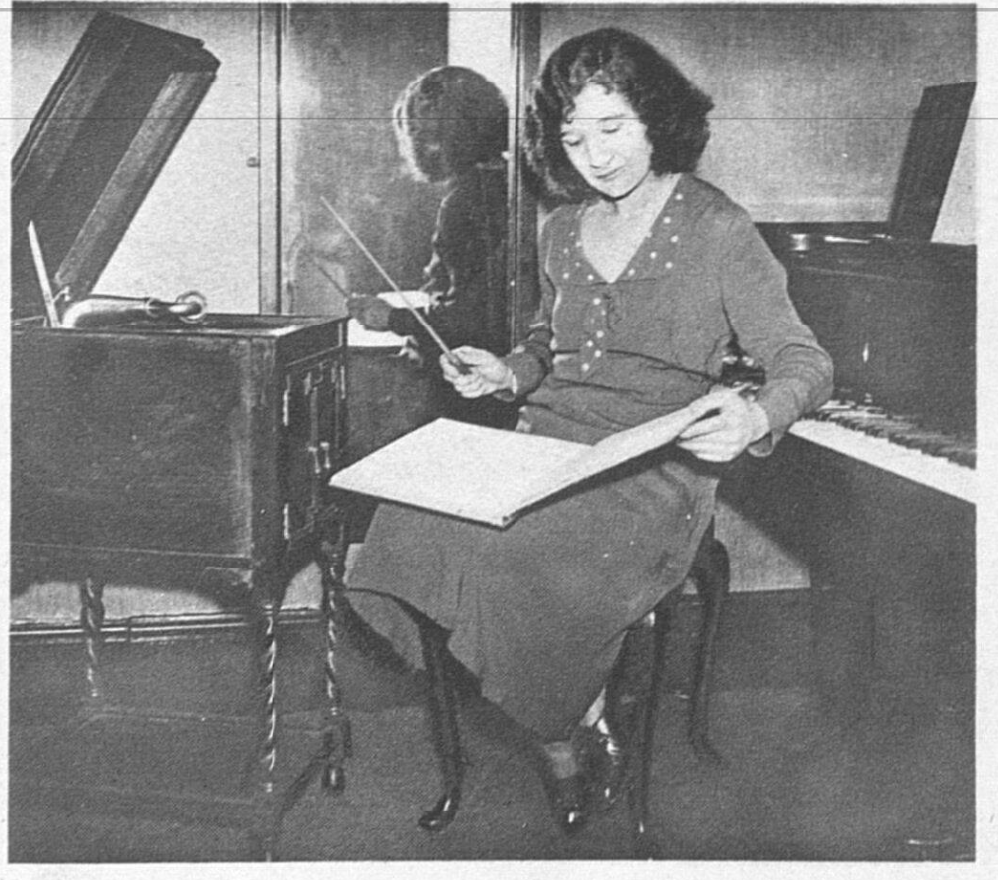
This summer Avril Coleridge-Taylor’s music will be played at the Proms for only the second time, with her piece ‘The Shepherd’ receiving its debut as part of the Great British Works Prom on the 4th August. She is a recent Proms arrival, her orchestral work ‘A Sussex Landscape’ was first performed there only last year. Yet despite this long neglect of her output, Avril was no stranger to the Albert Hall as a venue for her own work (and yes, the Proms only moved to the RAH in 1941). The Coleridge-Taylor family had a special connection with the concert hall.
Continue reading “Avril Coleridge-Taylor and the Royal Albert Hall”Program Notes for Avril Coleridge-Taylor’s ‘Comet Prelude’
This is a copy of a programme note I wrote for Croydon Music and Art’s recent performance of this extraordinary piece. I’ve added some images to the story so you can see a little more! It was written to help children and young people understand more of the context about the music they were playing.

Avril Coleridge-Taylor was born in South Norwood in 1903 and lived in 66 Waddon New Road in Croydon. She was the daughter of Samuel Coleridge-Taylor, the famous Black British composer, and so she grew up in a house of music: he was a successful composer and conductor not only in London’s music scene but around the world. This happiness was very brief, aged just 9, Avril experienced the tragic and very public loss of her Dad, who died from pneumonia aged only 37. She spent much of the rest of her life navigating his legacy and fighting to preserve it, while building her own career as a composer and a conductor.
She began composing at 12, and over her lifetime produced an array of music – some of which under the name of a man – much of which has been unperformed. She conducted at the Royal Albert Hall when she was 30 and formed the Coleridge-Taylor Symphony Orchestra in 1941. With her brother she worked hard to secure her dad’s legacy: while successful in his life, his impact began to be forgotten. It’s only in recent years his full musical contribution has been reassessed, and with that, Avril’s herself.

This piece, the Comet Prelude, was written at least partly on board a plane in 1952 – Avril was a passenger on the first ever jet flight, the De Havilland Comet, which would carry regular commercial passengers from London Heathrow to Johannesburg, South Africa. The beginning of the jet age was a time of great excitement about being able to reach far off destinations. It seems like she was brought onto the flight especially to compose while on board the plane – to show how thrilling air travel be. The plane stopped at several destinations to refuel including Rome, Beirut and Khartoum, stops which influenced her writing of the score.
Avril was going to Cape Town to conduct for the South African Broadcasting Company, something which at the time in the country was limited to white people. This was because of a policy that enforced the racist separation of people to give white people the most power, a system called Apartheid. Though she performed in South Africa for two years, when the South African government realised that Avril had a Black father and a white mother, her bookings were cancelled.
Understanding Avril and what she was doing in South Africa isn’t straightforward, and it is difficult to draw clear conclusions about it. [NB. Leah Broad and Samantha Ege have a fascinating piece on this here] Some have suggested she wanted to pass as white in order to change the government’s opinions, others that she wanted to build a career she wasn’t able to have in the UK due to sexism. We just don’t know, but what we do know is that the experience changed her, and she went on to support many other Black musicians in her later career, for example, she formed and led a choir of performers of colour in the UK in 1956. It’s worth remembering she was a composer and a conductor, and that she wrote this piece to conduct it.
Margaret Rosezarian Harris
Margaret Harris (1943 – 2000) is slightly better remembered for her work as a conductor than her contemporary, Joyce Brown. She had a long association with the musical Hair and conducted over 800 performances, on Broadway and as MD for its national tours .
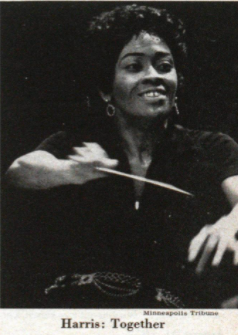
There’s much more to Harris’s career, and retracing newspaper coverage of her work reveals interviews with her, and the prospect of several Broadway shows she was never credited for. Footage of Harris conducting and playing the piano has also been found, and shared here for the first time.
Continue reading “Margaret Rosezarian Harris”The first RNCM cohort – snapshots of lives in music
In the last post – I talked about how we could research the people listed in the 1893 RNCM register, most of whom are women. I’ve shared some of the research findings here – with some intriguing, but sometimes incomplete findings. It is very difficult to find details on women’s professional careers because their names often changed at marriage – and not just their first name as some women became professionally known as Mrs [Husband’s first name] [Husband’s last name]. It is worth noting that the Married Women’s Property Act had only come into effect in 1882.
So here are 16 mini-biographies where women can be traced – more may be added if I find anything else!
Continue reading “The first RNCM cohort – snapshots of lives in music”Women in Music – RNCM 1893
Back in the *before times* I did quite a lot of research on the 1893 register of the first intake into what was then the Royal Manchester College of Music.
I’ve come back to this dataset to think about how we can understand who was part of this first group of students, and how they began their professional careers. The first intake into the school in October 1893 was 82% female – and some later historical accounts of the school emphasised the idea that it was a kind of finishing school for nice, middle-class, ladies looking for good husbands. But the reality is very different, and the evidence clearly demonstrates the school was a vital part of training musicians and teachers, right from the beginning. The assumption has been made that because it was for women, it couldn’t possibly have been serious, but of course, that’s just not the case.
Continue reading “Women in Music – RNCM 1893”Working with the Royal Northern College of Music Archives

Been meaning to share these on here for a while: part of an ongoing project with the RNCM archives to address their early log books and unpick the women who attended the college in 1893-1894.
Women in 1930s Musicals: Anne Croft
This is another entry for an ongoing dictionary of women who worked in musical theatre in the 1930s in the UK. It is an evolving document – for more please get in touch via Twitter.
Anne Croft (b. Hull 1896 – d. 1944)
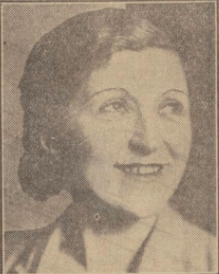
Croft was an actor, producer and director: her career raises intriguing questions about the relationship between twice nightly variety and musical theatre, that at the very least, is far more complicated than you might think.
Continue reading “Women in 1930s Musicals: Anne Croft”Women in 1930s Musicals: Irene Kensington, Choreographer
This is another entry in a continuing dictionary of women who worked in musical theatre in the 1930s in the UK. It is an evolving document – for more please get in touch via Twitter.
Irene Kensington (fl. 1925 – 1934)
Kensington was a choreographer and costume designer; she was also a pianist and arranger. Frustratingly little can be found of her life – she appears and vanishes.
Kenginston had a long association with June Radbourne’s dance ensemble the June Dancers, who performed across variety and concert venues, as both choreographer and costume designer. Initial reports of their performances note that she ‘is also responsible for modernistic arrangements of Chopin and Liszt, as well as impressions of true moderns like Glinka, Ravel and Grainger. Strauss, Coleridge-Taylor and Schubert also figure in the versatile repertoire of these eight talented dancers.’ (Portsmouth Evening News, 16/08/32, 2)
The ensemble performed at a range of venues including variety theatres like the London Coliseum in 1928, and the Hackney Empire 1929; and concert party settings like the Floral Hall in Eastbourne, August 1929 and Portsmouth in 1931. They also played in cabaret settings, including Frascati’s Frascaberat in London 1931. Kensington also designed the costumes for the dancers, Very little survives of the company apart from a few postcard images of Radbourne herself and one or two of the dancers.
Newspaper reports reveal Kensington attended the Margaret Morris school of ‘Dancing and Other Arts’ in 1920. In 1927, she designed and choreographed for a troupe from the the Margaret Morris Theatre, presumably from the school; the troupe were the basis for the Radbourne company.
Elsewhere, Kensington designed the costume for the Seymour Hicks play What’s His Name; as well as choreographing and costume designing the 1932 musical She Shall Have Music. The last reference to her is choreographing Babes in the Wood in Exeter in 1934, but at present, no further information can be found.
 Sarah Whitfield