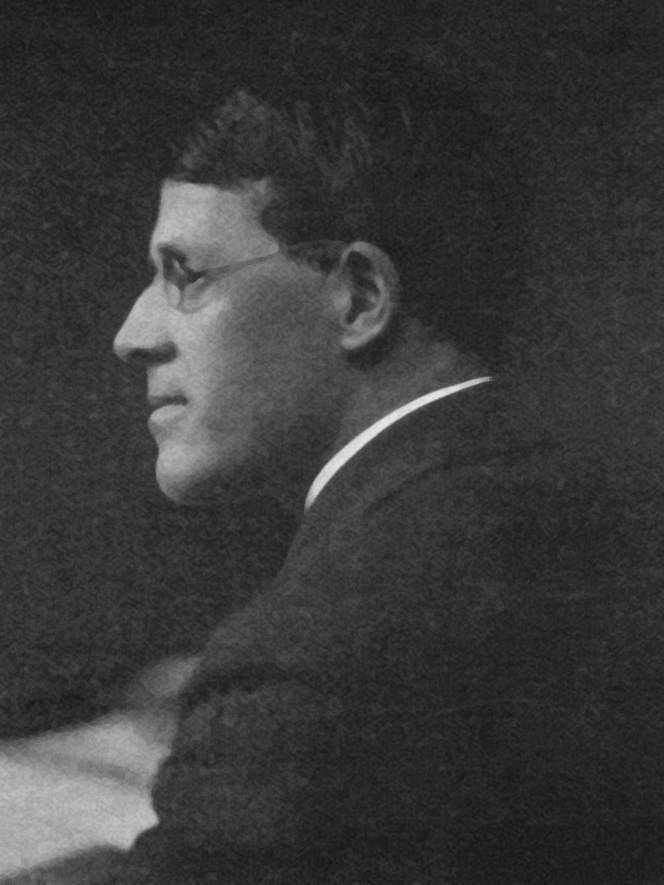
Thomas Appleby Matthews (1884-1949) is a surprisingly unknown figure given his importance to music making in Birmingham. He was the first conductor of what became the City of Birmingham Symphony Orchestra – then the City of Birmingham Orchestra.
He does have a Wikipedia article to his name, but no article in Grove Music (Oxford Music Online) – though he gets a mention in their article on Birmingham’s music history. I’ve been drawn into his story because of the commitment he had to put classical music where people already were – in local cinemas and theatres.
As should by this point be becoming clearer, I like a wild goose chase. In this case, a very short Wikipedia article on Harriet Maitland Young (1838-1923) got my attention, a composer about whom very little is known other than her mention in the Women’s Work in Music (1903). The Wikipedia article lists four operettas by Young, and notes she is buried in Camden. So if we dig a bit more… what do we find? I think you’ll know by now I can’t resist a mystery adventure.
I am sat in Preston Guild Hall, enraptured by the lyrical brilliance of the guitar duo my Dad has taken me to see. I can’t be more than 12, I could be at Madison Square Gardens or the Hollywood Bowl (except I don’t yet know they exist because I live in Lancashire). I am here to see the incredible lyrics of two men singing in close harmony with the unique sound of gentle guitar accompaniment, listening to songs that are surely going to change popular music.
This is a copy of a programme note I wrote for Croydon Music and Art’s recent performance of this extraordinary piece. I’ve added some images to the story so you can see a little more! It was written to help children and young people understand more of the context about the music they were playing.
Avril Coleridge-Taylor
Avril Coleridge-Taylor was born in South Norwood in 1903 and lived in 66 Waddon New Road in Croydon. She was the daughter of Samuel Coleridge-Taylor, the famous Black British composer, and so she grew up in a house of music: he was a successful composer and conductor not only in London’s music scene but around the world. This happiness was very brief, aged just 9, Avril experienced the tragic and very public loss of her Dad, who died from pneumonia aged only 37. She spent much of the rest of her life navigating his legacy and fighting to preserve it, while building her own career as a composer and a conductor.
She began composing at 12, and over her lifetime produced an array of music – some of which under the name of a man – much of which has been unperformed. She conducted at the Royal Albert Hall when she was 30 and formed the Coleridge-Taylor Symphony Orchestra in 1941. With her brother she worked hard to secure her dad’s legacy: while successful in his life, his impact began to be forgotten. It’s only in recent years his full musical contribution has been reassessed, and with that, Avril’s herself.
This piece, the Comet Prelude, was written at least partly on board a plane in 1952 – Avril was a passenger on the first ever jet flight, the De Havilland Comet, which would carry regular commercial passengers from London Heathrow to Johannesburg, South Africa. The beginning of the jet age was a time of great excitement about being able to reach far off destinations. It seems like she was brought onto the flight especially to compose while on board the plane – to show how thrilling air travel be. The plane stopped at several destinations to refuel including Rome, Beirut and Khartoum, stops which influenced her writing of the score.
Avril was going to Cape Town to conduct for the South African Broadcasting Company, something which at the time in the country was limited to white people. This was because of a policy that enforced the racist separation of people to give white people the most power, a system called Apartheid. Though she performed in South Africa for two years, when the South African government realised that Avril had a Black father and a white mother, her bookings were cancelled.
Understanding Avril and what she was doing in South Africa isn’t straightforward, and it is difficult to draw clear conclusions about it. [NB. Leah Broad and Samantha Ege have a fascinating piece on this here] Some have suggested she wanted to pass as white in order to change the government’s opinions, others that she wanted to build a career she wasn’t able to have in the UK due to sexism. We just don’t know, but what we do know is that the experience changed her, and she went on to support many other Black musicians in her later career, for example, she formed and led a choir of performers of colour in the UK in 1956. It’s worth remembering she was a composer and a conductor, and that she wrote this piece to conduct it.
This round up of some of the key black ‘classical’ composers is by no means a comprehensive list: but a starting point for music teachers and lecturers who want to know more about European and North American black classical composers. This is by no means a quick fix – the work of decolonising the curriculum is a big project that requires white people to think about how they have participated in structural racism and white supremacy. I have been asked by a couple of people to put together a starting point over a few categories: black ‘classical’ composers, black modernist composers, women composers, and a broader list of musical theatre composers. Over the next couple of weeks I will be sharing these resources and pointing you in the direction of key antiracist campaigns, particularly the work of teacher and anti-racism activist, Pran Patel, and musician and activist Nate Holder.



 Sarah Whitfield